
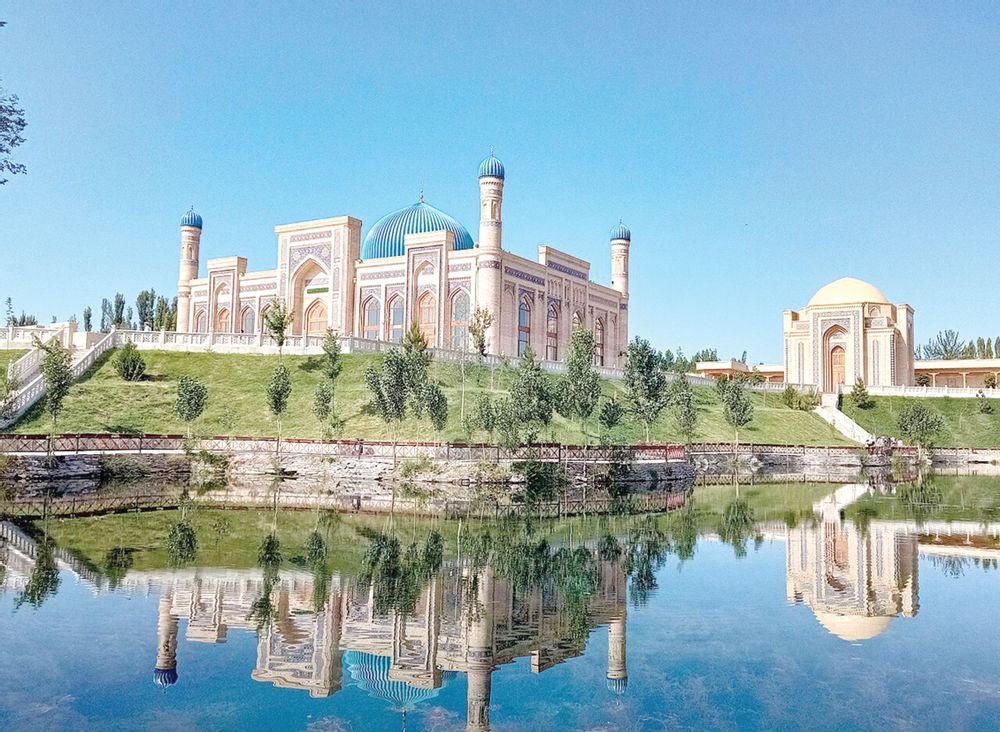
"Baliqlikol" pilgrimage site, located in "Bohistan" neighborhood of Chortoq district of Namangan region, is one of the places of pilgrimage that has been occupying a special place in the spiritual life of the people for centuries. In 2019, this complex, included in the national list of immovable property objects of the material and cultural heritage of Uzbekistan, is not only a historical monument, but also a unique place embodying high spiritual values. Although the period of its first formation is associated with the 19th century - more precisely, 1863, legends and archaeological views show that the roots of this area go back to the 12th-13th centuries.
First of all, this shrine is closely related to the name of Sultan Uwais Qarani, who has received great respect and love in the Islamic world. His personality, life and spiritual legacy are widely covered not only in historical sources, but also in folklore.
A symbol of absent love
Sultan Uwais Qarani was born and raised in the village of Qaran, Yemen, in a simple herdsman's family.
According to the narrations, he considered serving his mother as the highest duty of his life. Even when he had the opportunity to meet the Prophet, he took his mother's permission with one condition: if he did not find him at home, he had to go back. The fact that Uwais Qarani came to Madinah and did not find the Prophet (pbuh) but returned faithful to his promise raised his obedience and loyalty to a higher level.
A place of miracles
Baliqlikol, which is the central part of the shrine, is also a unique natural area. Its water is always clean, clear and does not freeze. This may be due to the underground springs, but among the people, this lake is considered as a divine blessing.
Large fish living in the lake are also under special protection. According to legends, it is impossible to harm them - otherwise, there are beliefs that misfortune will befall a person.
"Milk Spring"
Another unique place on the territory of the shrine is a water source popularly known as "Milk Spring" or "Mysterious Spring". Its most surprising feature is that on certain days of the week the water becomes milky and then becomes clear again.
According to legends, this spring appeared with the blessing of Sultan Uwais Qarani. When he could not find water to bury his mother, he asked the Creator for help, and immediately a spring came out of the ground. Even today, pilgrims enjoy this water, considering it to be healing.
Mother Bibi Naima Mausoleum
The mausoleum of mother Bibi Naima, which is an integral part of the shrine complex, is seen as a bright symbol of Uwais Qarani's infinite love and respect for his mother. This mausoleum is located on a hill, and according to legends, Uwais was buried at its foot according to the will of his mother. This further strengthens one of the ancient values of the Uzbek people - the idea of respect and loyalty to the mother.
The name of Sultan Uwais Qarani is closely related to Sufi teachings. He is often credited as one of the spiritual inspirations of this movement. Therefore, the "Baliqlikol" pilgrimage site is a place of special importance for the followers of Sufiism.
Modern appearance and tourism potential
In recent years, large-scale improvement works have been carried out in this shrine. A new mosque, verandas, a modern hotel, a national museum, a library, fountains and recreation centers were built. Landscaping in the region has also been widely started, and thousands of ornamental trees and flower seedlings have been planted.
Also, a huge manuscript copy of the Qur'an kept here is of great scientific and cultural importance. It weighs 21.5 kilograms, consists of 428 pages, and is considered one of the largest books in Uzbekistan.
"Baliqlikol" shrine is not only a historical monument. It is a combined destination of human heart, faith, love and natural wonders. Here, every visitor will find a meaning close to his heart: someone is looking for healing, someone is comforting, and someone is taking steps towards spiritual ascension.
Today, this holy place has become one of the important points of pilgrimage tourism not only in Namangan region, but also in the whole of Uzbekistan. Its fame is expanding day by day, attracting pilgrims from all over the world.
Jahangir Tokhtasinov,
our own reporter.