
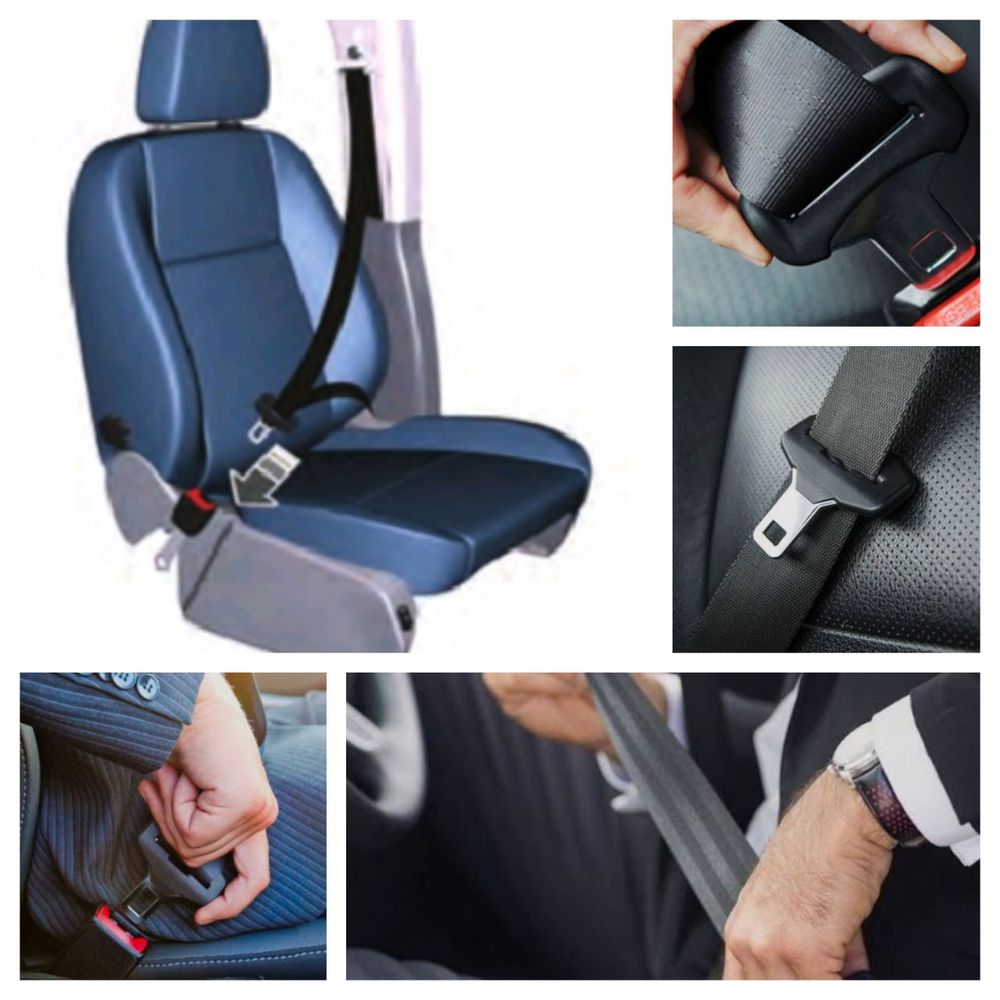
A seat belt is a protective device designed to restrain a driver or passenger in the event of a traffic accident, collision or sudden stop. In the event of a collision (accident), the seat belt reduces the risk of death for the passenger or driver in the front and back seats by 2 times, depending on the type of collision, and by 5 times when the collided vehicle overturns.
If we look at the history of the creation of the seat belt. At the beginning of the 19th century, the English scientist George Cayley proposed the use of a seat belt. In 1885, this device was first patented in the USA. 1903 Louis Reno invented the five-point seat belt. 1909 In England, a safety device designed to hold a passenger in a seat with a coil spring and large tape is invented.
In the history of aviation in 1913, the seat belt was first used by Adolphe Pegu, but by 1930, seat belts were no longer used on airplanes. In the early 1920s, seat belts began to be used by racers. But the seat belts of those times were not popular among cars because they were uncomfortable for everyday use. In the late 1950s, engineer Nils Bolin of the Swedish automobile company "Volvo" invented a three-point safety belt. After many years of experience and practical testing, Bolin concluded that a seat belt pulled from the shoulder to the waist is the most comfortable for passengers. In addition, such a seat belt was considered convenient to fasten by hand. In 1959, the company "Volvo" presented such safety belts to the public. Thus, for the first time in 1957, Sweden became the first country to introduce the obligation to wear seat belts for cars.
Feruz YOLDOSHOV,
our own reporter.