
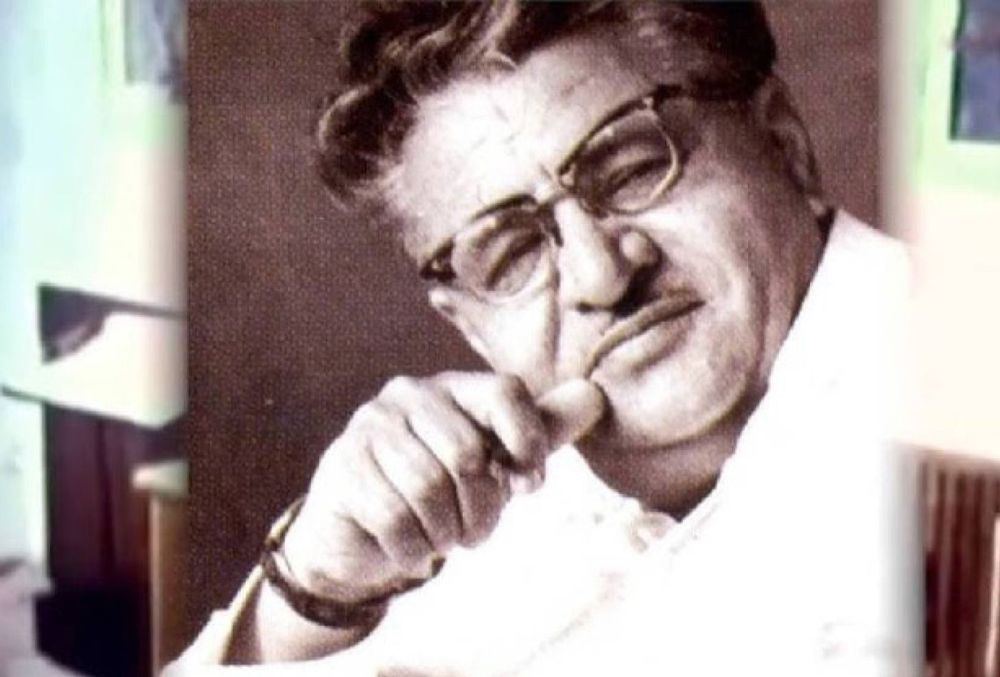
Domla Sheikhzada was a highly educated person. In particular, he had a deep knowledge of Uzbek classical literature. The "Genial Poet" collection, published in Tashkent in 1941, consists of scientific articles of the literary scholar on Navoi's work. This in-depth scientific study of Navoi's poetry will always occupy a special place in Navoi studies.
Shaykhzada was a sharp researcher who started a deep study of Navoi's skill and artistry. Ustoz's lectures and special courses on the history of Uzbek literature in the leading universities of our country for many years were a reflection of his great love for our classic literature.
For many years, he loved and studied the work of the brilliant Uzbek poet and thinker Alisher Navoi, and in his articles and pamphlets written with love, he expressed his high respect and love for this great genius with great sincerity and scientific depth. Shaykhzada seriously studied the works of classical poets such as Babur, Ogahi, Amiri, Nadirabegim, Muqimi, Zavqi, and Furqat, and constantly published his scientific researches.
This great love can be seen when the talented poet translated the works of the classic writers of world literature into Uzbek. In particular, Shakespeare's works "Hamlet" and "Romeo and Juliet" were staged on the stage of Uzbek theaters in the translation of Shaikhzoda. Among the generation of poets who introduced the poems of Pushkin, Lermontov, Byron to Uzbek readers for the first time, Shaykhzada is included.
CATAGOON BOOK
The repression machine, which was launched in the 30s of the last century and worked tirelessly in the following years, did not bypass Maqsud Sheikhzadeh. It was at the beginning of the 50s that the poet was imprisoned for no reason, and he was exiled for 25 years. After Stalin's death, during the review of the cases of those unjustly imprisoned for slander, along with many of our selfless intellectuals, Shaikhzada was acquitted. But as a result of five years of imprisonment, the poet's health deteriorated. Nevertheless, he had to live on the top floor of a high-rise building for 10 years until the end of his life. Even in such difficult conditions and illness, he did not stop creating until his last breath. Most importantly, no matter how many difficult days have passed since the beginning, he has never been forced. Nowhere did he say anything about those who betrayed him, who made him suffer and suffer serious illnesses. Sheikhzada remained faithful to his human qualities and always lived with the virtues of benevolence and nobility.
"TOLE WAS NOT ALWAYS PATTERNED" ADIB
Often, the fate of a work whose creator has not been rewarded is not free from problems. This can be seen in the example of Maqsud Sheikhzadeh, who wrote that "the heroism of our people's labor, struggle and battle, freedom and friendship, happiness and sorrow, the beautiful landscapes of the country and the spiritual beauty of man became familiar to my pen and meaningful to my tongue" and the tragedy "Jalaluddin Manguberdi", one of his masterpieces.
The poet, who was arrested in 1928 and exiled to Tashkent for being a member of the "National Firka" organization and taking an active part in the "Musavot" movement, was also persecuted and insulted by the Shura government in Uzbekistan.
In the tragedy "Jalaluddin Manguberdi" written in 1944, when the Second World War was at its height, the historical accurate and truthful depiction of the bravery of the last Khorezm king who fought for the freedom and independence of his country against the Mongol invaders was highly appreciated by Oibek and Gafur Ghulom. However, except for the fact that until 1946 some excerpts from the drama were published in the "Armugon" collection, for the next 43 years nothing was said about the play. After the play was removed from the stage due to the political accusation that it idealized the past, Sheikhzada himself went to prison. Interestingly, despite the fact that the author was released from prison, the confiscated manuscript of the work was not returned to the playwright. What is even more amazing is that even the only copy that was found with some effort remains unpublished for several decades.
In another twist of fate, the author died without ever seeing his work published. Twenty years after his death, "Jalaluddin Manguberdi" will be published in full for the first time in Uzbek language in the writer's book "Baqi Dunya".Another ten years later, the decision of the Cabinet of Ministers "On celebrating the 800th anniversary of the birth of Jalaluddin Manguberdi" confirmed one hundred percent that Maqsud Sheikhzade's fair approach to the history of our nation, in particular, the fate and struggle of Jalaluddin Manguberdi, protected the historical truth.
CONCLUSION IN PLACE
Sheikhzada lived a short life - at the time when his creativity was at its peak, when he was not even 60 years old, he died on February 19, 1967 after a long illness. He was buried in the Farobi cemetery of Tashkent.
A lot could be written about this great man who was born in Ganja region, where Nizami was born, who came to the Uzbek soil by the stroke of heaven, created with pleasure, made a significant contribution to the modern Uzbek literary language and literature. But the philosopher-poet himself said the conclusion of the article:
There will be times when
He is dead when he is alive.
There will be times when
A dead man is alive.
Iron SACRIFICE.